Media: Maison Ë
Original title: Collector of Lemons
Author: Anna Burghardt
Photography: Carlos Chavarria
Date: August 2026
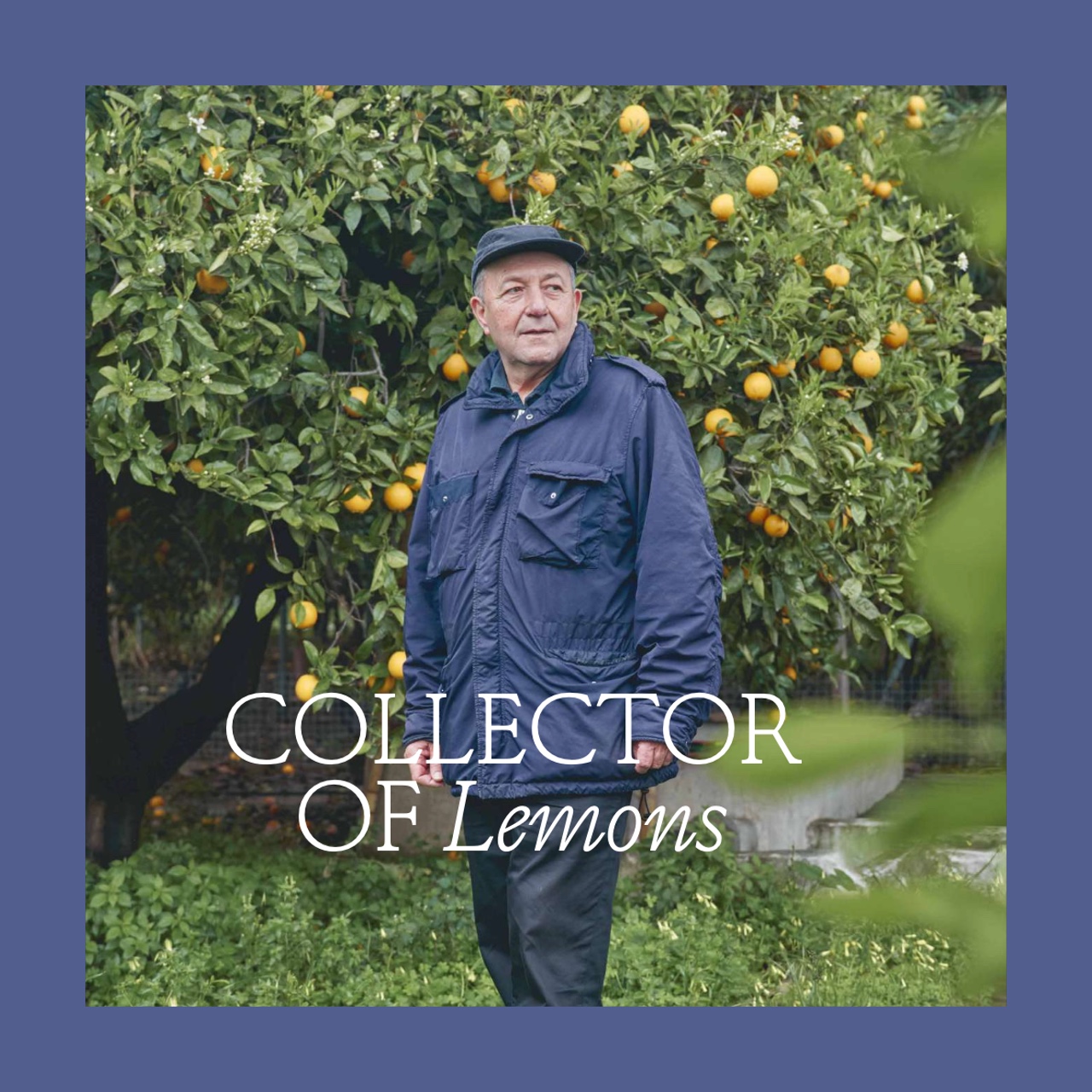
Collector of lemons
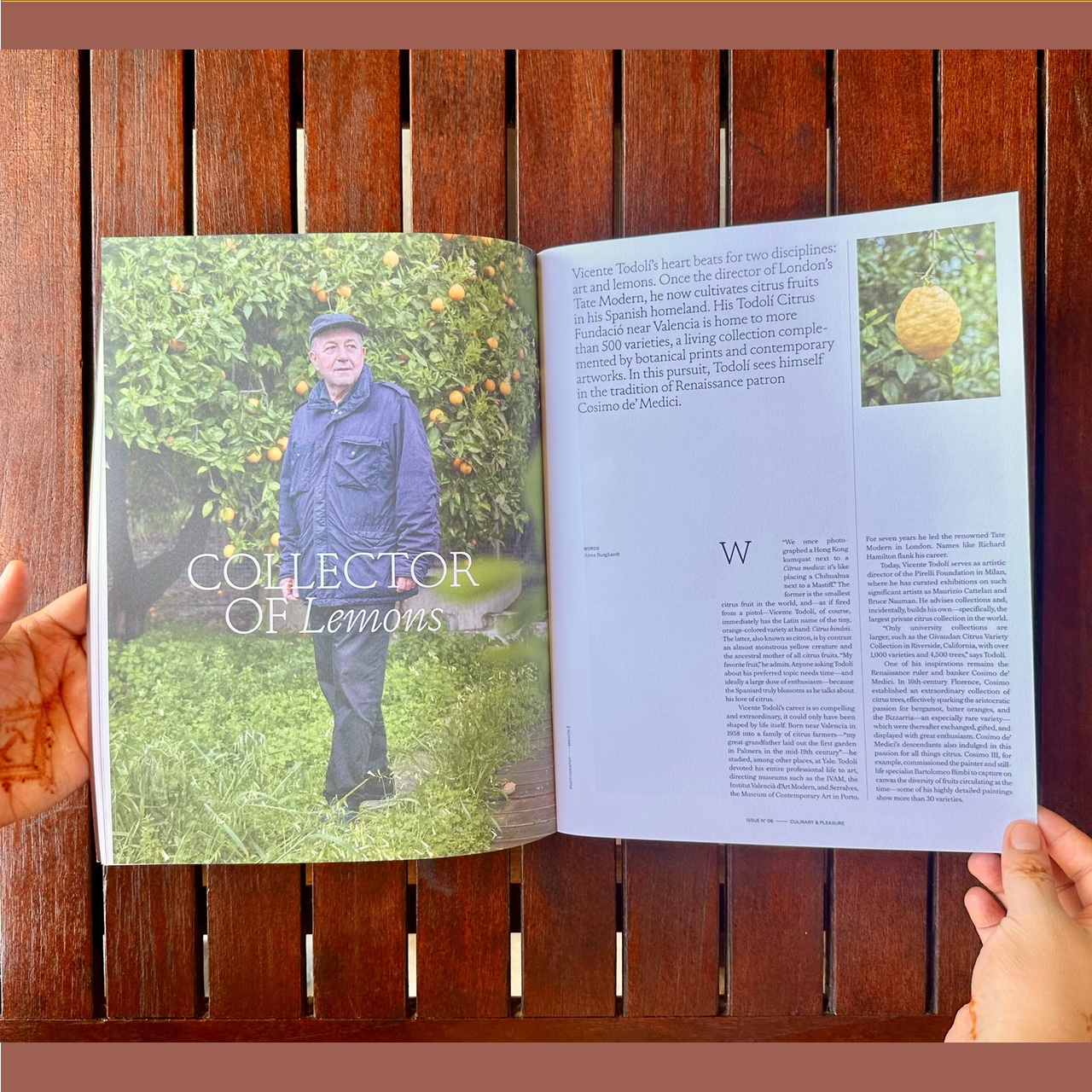
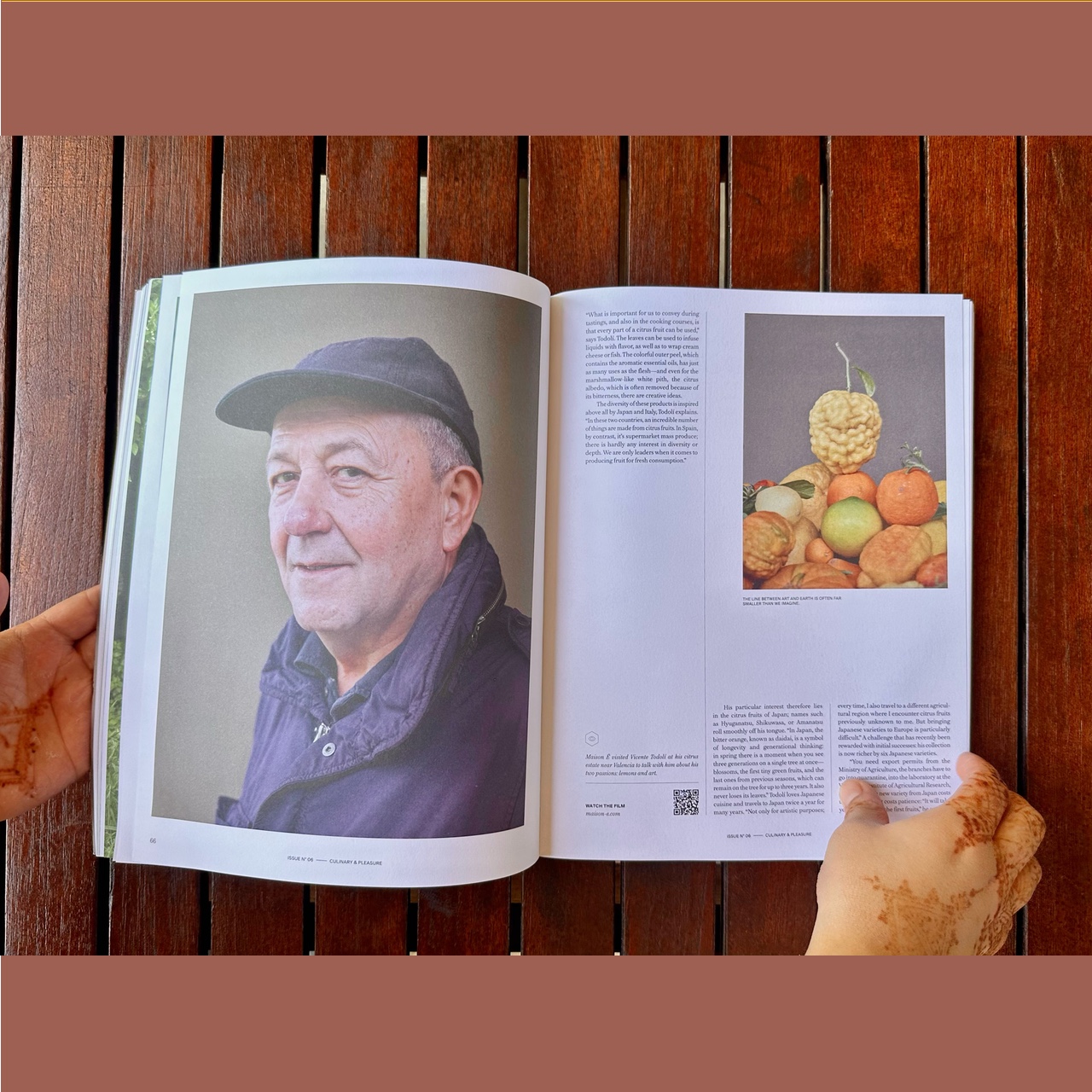
Vicente Todolí’s heart beats for two disciplines:art and lemons. Once the director of London’s
Tate Modern, he now cultivates citrus fruits in his Spanish homeland. His Todolí Citrus Fundació near Valencia is home to more than 500 varieties, a living collection complemented by botanical prints and contemporary artworks. In this pursuit, Todolí sees himself in the tradition of Renaissance patron Cosimo de’ Medici.
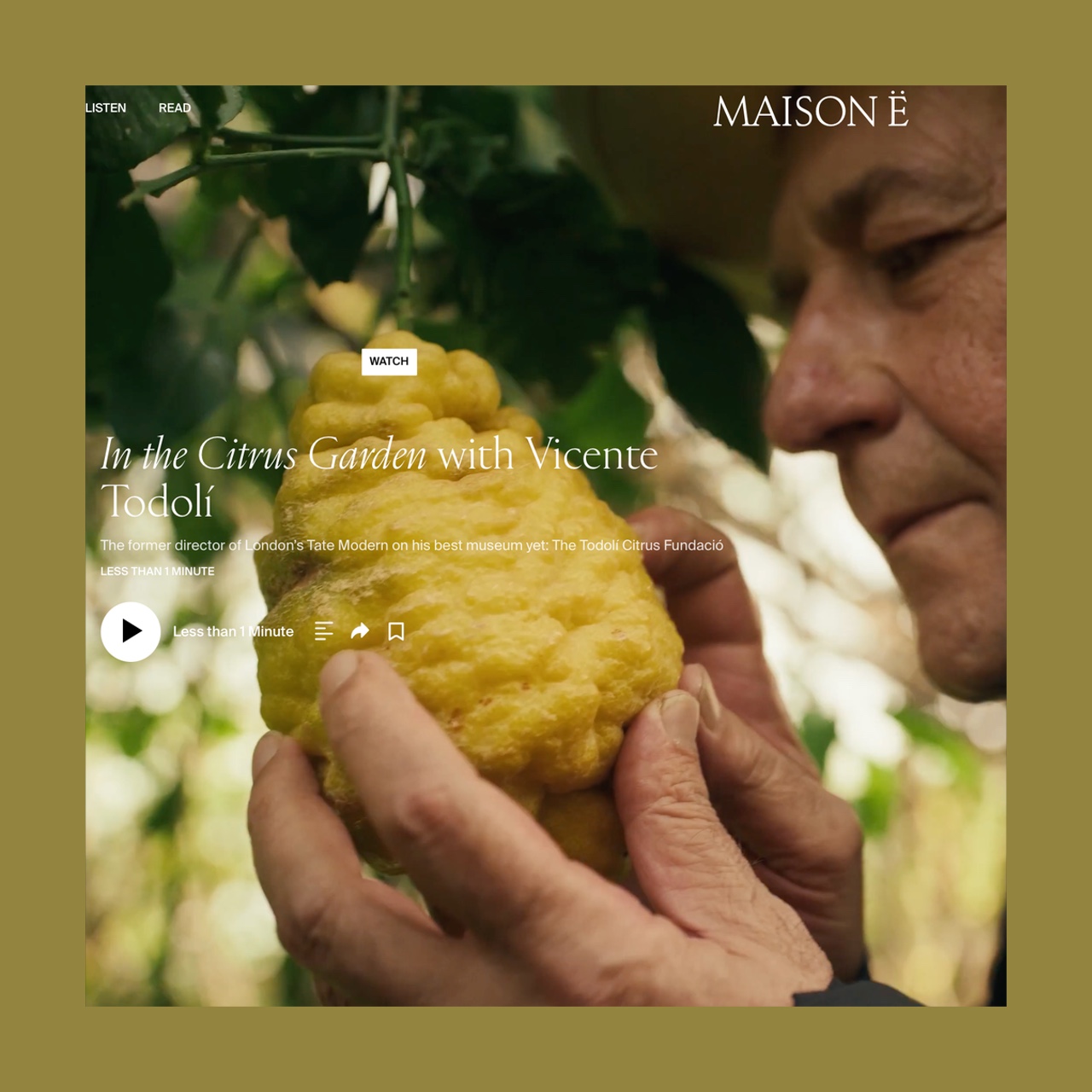
“We once photographed a Hong Kong kumquat next to a Citrus medica: it’s like placing a Chihuahua next to a Mastiff.” The former is the smallest citrus fruit in the world, and—as if fired from a pistol—Vicente Todolí, of course, immediately has the Latin name of the tiny, orange-colored variety at hand: Citrus hindsii. The latter, also known as citron, is by contrast an almost monstrous yellow creature and
the ancestral mother of all citrus fruits. “My favorite fruit,” he admits. Anyone asking Todolí about his preferred topic needs time—and ideally a large dose of enthusiasm—because the Spaniard truly blossoms as he talks about his love of citrus.
Vicente Todolí’s career is so compelling and extraordinary, it could only have been shaped by life itself. Born near Valencia in 1958 into a family of citrus farmers—“my great-grandfather laid out the first garden in Palmera in the mid-19th century”—he studied, among other places, at Yale. Todolí devoted his entire professional life to art, directing museums such as the IVAM, the Institut Valencià d’Art Modern, and Serralves, the Museum of Contemporary Art in Porto. For seven years he led the renowned Tate Modern in London. Names like Richard Hamilton flank his career.
Today, Vicente Todolí serves as artistic director of the Pirelli Foundation in Milan, where he has curated exhibitions on such significant artists as Maurizio Cattelan and Bruce Nauman. He advises collections and, incidentally, builds his own—specifically, the largest private citrus collection in the world.
“Only university collections are larger, such as the Givaudan Citrus Variety Collection in Riverside, California, with over 1,000 varieties and 4,500 trees,” says Todolí.
One of his inspirations remains the Renaissance ruler and banker Cosimo de’ Medici. In 16th-century Florence, Cosimo established an extraordinary collection of citrus trees, effectively sparking the aristocratic passion for bergamot, bitter oranges, and the Bizzarria—an especially rare variety—
which were thereafter exchanged, gifted, and displayed with great enthusiasm. Cosimo de’
Medici’s descendants also indulged in this passion for all things citrus. Cosimo III, for example, commissioned the painter and stilllife specialist Bartolomeo Bimbi to capture on canvas the diversity of fruits circulating at the time—some of his highly detailed paintings show more than 30 varieties.
A PLACE FOR CULTIVATION AND CONTEMPLATION
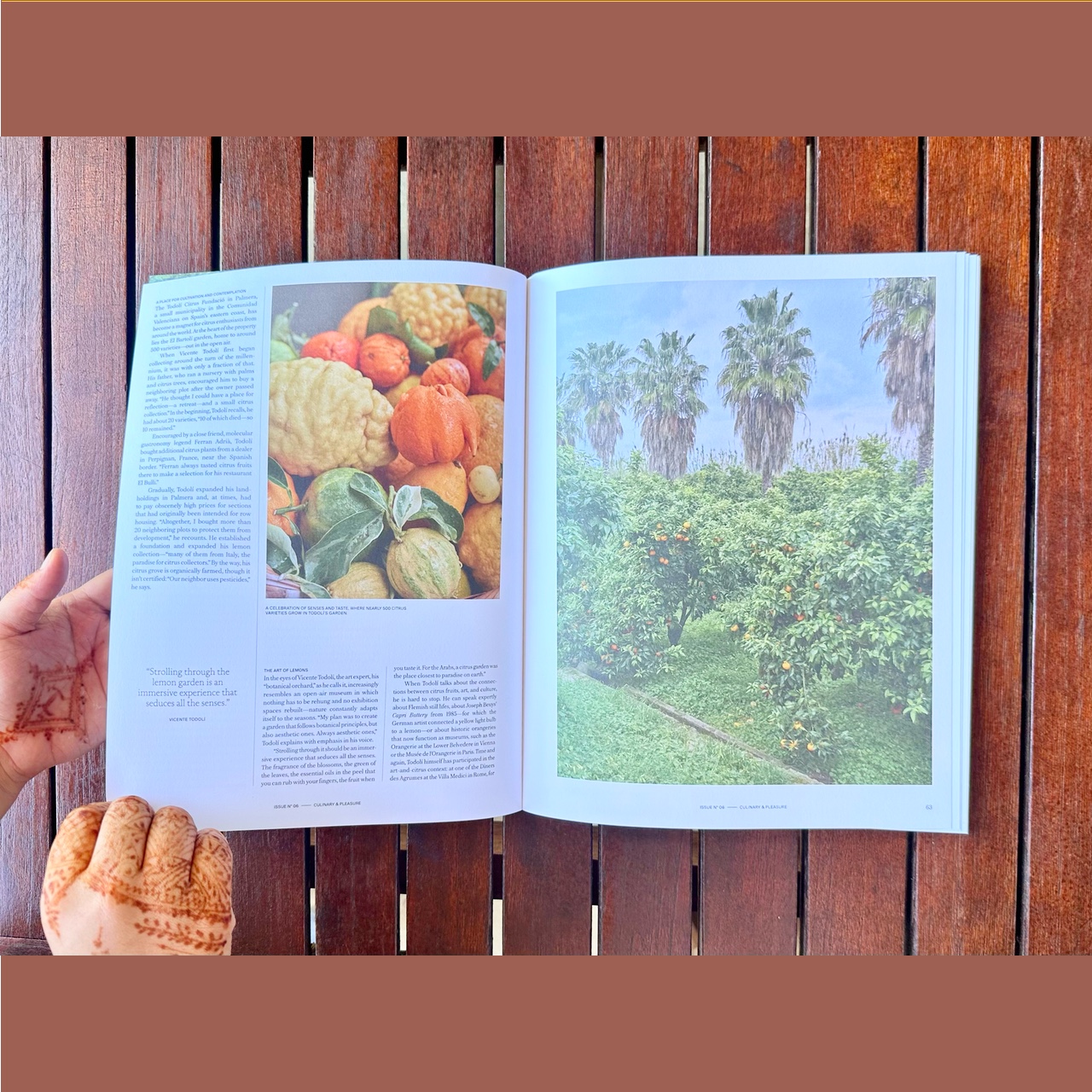
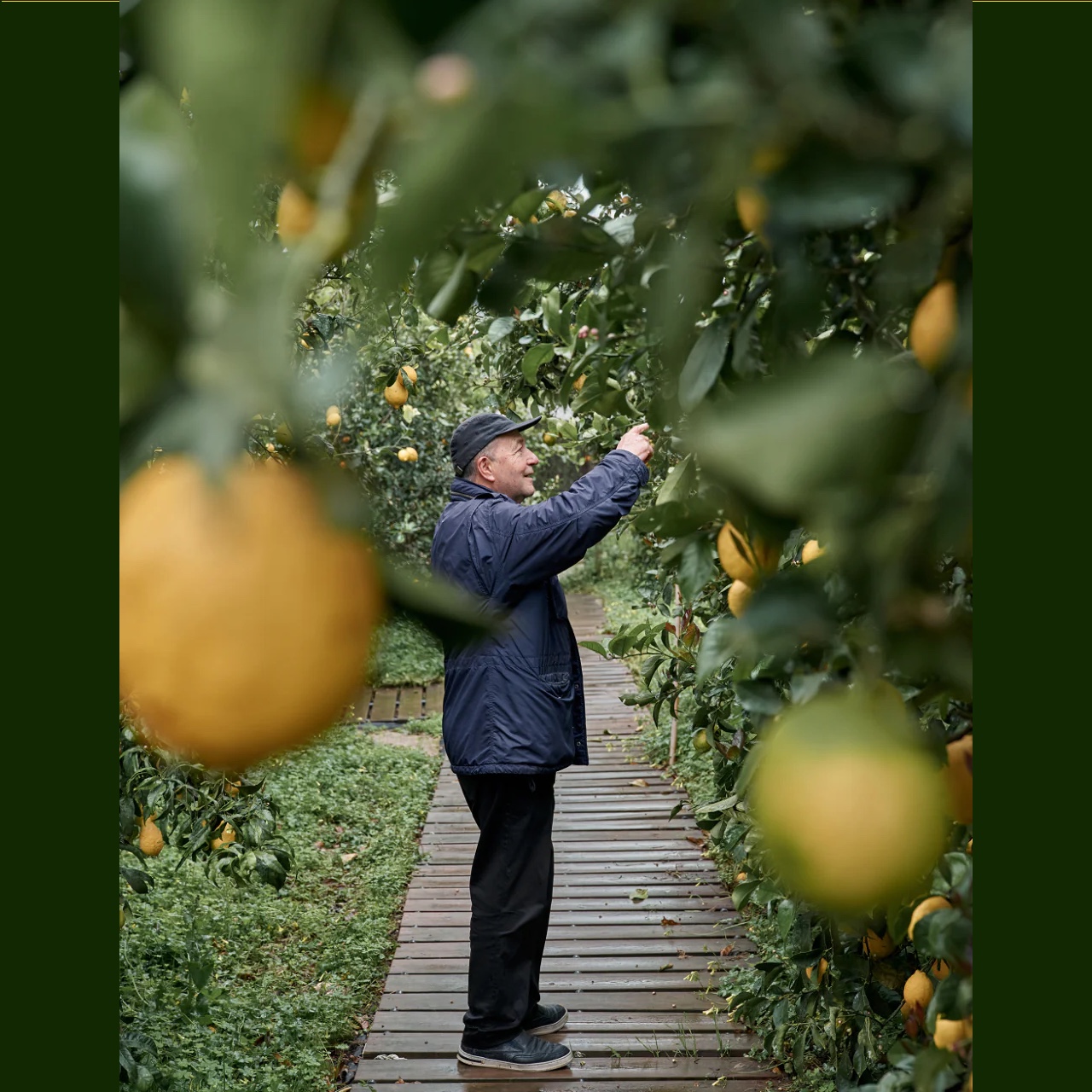
The Todolí Citrus Fundació in Palmera, a small municipality in the Comunidad Valenciana on Spain’s eastern coast, has become a magnet for citrus enthusiasts from around the world. At the heart of the property lies the El Bartolí garden, home to around 500 varieties—out in the open air.
When Vicente Todolí first began collecting around the turn of the millennium, it was with only a fraction of that. His father, who ran a nursery with palms and citrus trees, encouraged him to buy a neighboring plot after the owner passed away. “He thought I could have a place for reflection—a retreat—and a small citrus collection.” In the beginning, Todolí recalls, he had about 20 varieties, “10 of which died—so 10 remained.”
Encouraged by a close friend, molecular gastronomy legend Ferran Adrià, Todolí bought additional citrus plants from a dealer in Perpignan, France, near the Spanish border. “Ferran always tasted citrus fruits there to make a selection for his restaurant El Bulli.”
Gradually, Todolí expanded his landholdings in Palmera and, at times, had to pay obscenely high prices for sections that had originally been intended for row housing. “Altogether, I bought more than 20 neighboring plots to protect them from development,” he recounts. He established a foundation and expanded his lemon collection—“many of them from Italy, the paradise for citrus collectors.” By the way, his citrus grove is organically farmed, though it isn’t certified: “Our neighbor uses pesticides,” he says.
“Strolling through the lemon garden is an immersive experience that seduces all the senses.”
THE ART OF LEMONS
In the eyes of Vicente Todolí, the art expert, his “botanical orchard,” as he calls it, increasingly resembles an open-air museum in which nothing has to be rehung and no exhibition spaces rebuilt—nature constantly adapts itself to the seasons. “My plan was to create a garden that follows botanical principles, but also aesthetic ones. Always aesthetic ones,” Todolí explains with emphasis in his voice.
“Strolling through it should be an immersive experience that seduces all the senses. The fragrance of the blossoms, the green of the leaves, the essential oils in the peel that you can rub with your fingers, the fruit when you taste it. For the Arabs, a citrus garden was the place closest to paradise on earth.”
When Todolí talks about the connections between citrus fruits, art, and culture, he is hard to stop. He can speak expertly about Flemish still lifes, about Joseph Beuys’ Capri Battery from 1985—for which the German artist connected a yellow light bulb to a lemon—or about historic orangeries that now function as museums, such as the Orangerie at the Lower Belvedere in Vienna or the Musée de l’Orangerie in Paris. Time and again, Todolí himself has participated in the art and-citrus context: at one of the Dîners des Agrumes at the Villa Medici in Rome, for example, various hollowed-out lemons from his collection were used as warmly glowing lampshade sculptures.
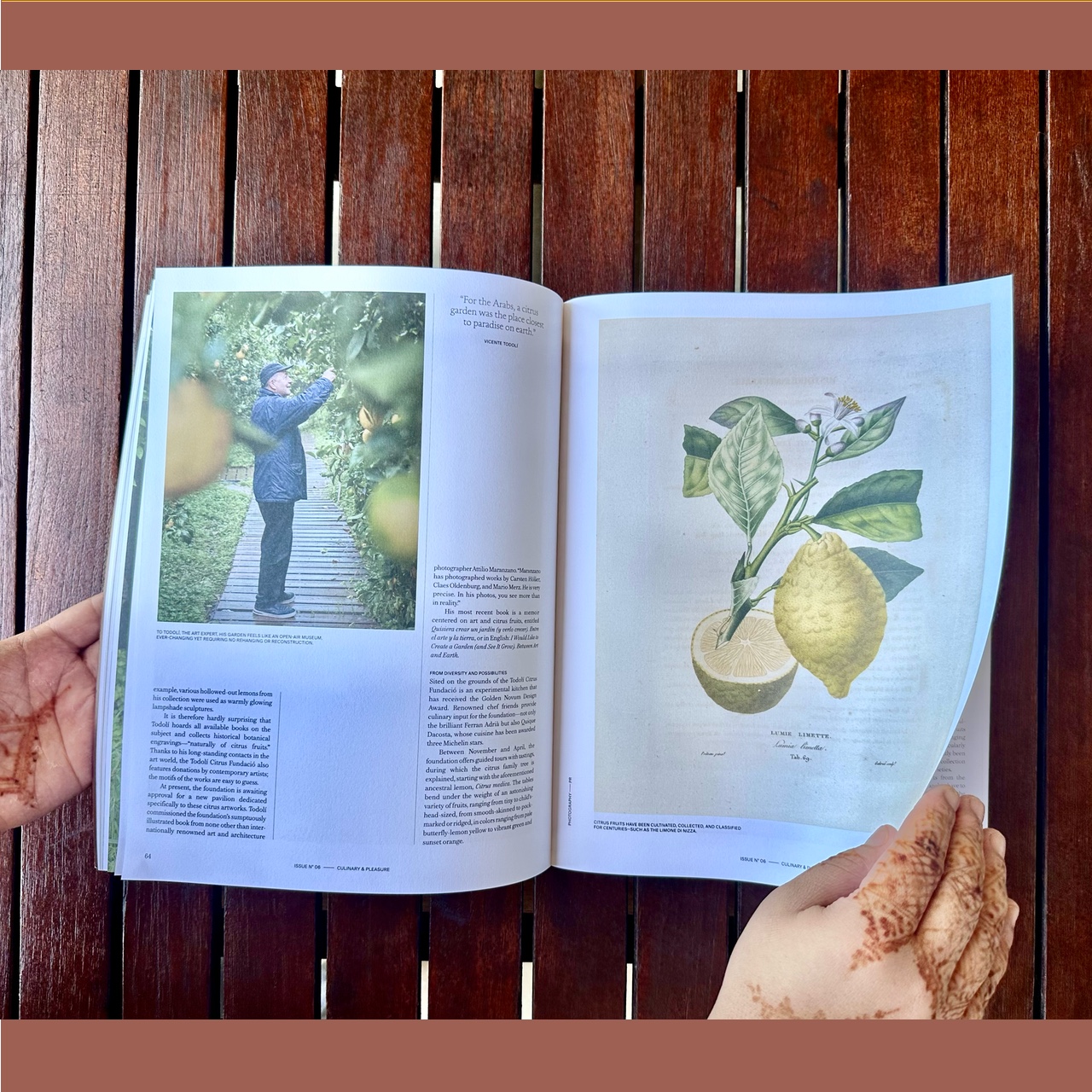
It is therefore hardly surprising that Todolí hoards all available books on the subject and collects historical botanical engravings—“naturally of citrus fruits.” Thanks to his long-standing contacts in the art world, the Todolí Citrus Fundació also features donations by contemporary artists; the motifs of the works are easy to guess.