ADN – DNA, 2020-2023
Title: ADN–DNA
Artist: Antoni Miralda
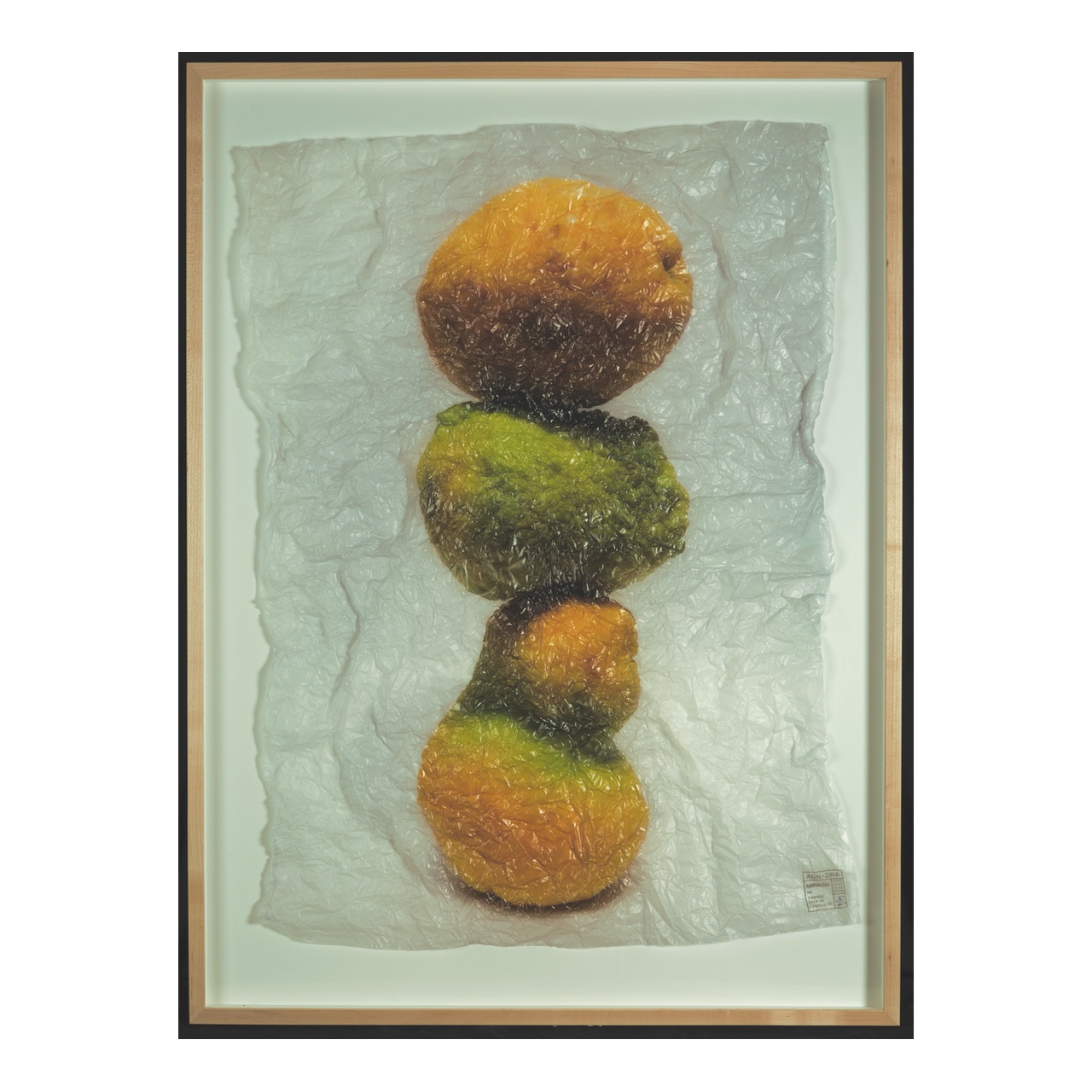
Materials: 7 colour photographs printed on 18 gsm tissue paper
Dimensions: paper, 88 × 62 cm each sheet (each work framed: 92 × 68.5 cm)
Edition: 15 + 6 AP + 2 HC
Donation from the artist intended for sale
This project, a work by artist Antoni Miralda, has been made possible thanks to the generosity of the artist and gallerist Moisés Pérez de Albéniz. The former is the author of the work, while the latter is the patron responsible for its production. Together, they have brought this edition to life as a gift to Todolí Citrus Fundació.
The work is intended for direct sale by the Foundation, and the proceeds will support the Foundation’s research, outreach and educational activities.
ADN–DNA began in 2020, when, during the months of COVID-19 lockdown, Vicente Todolí, President and founder of Todolí Citrus Fundació, decided to send boxes containing a selection of citrus fruits from El Bartolí Botanical Orchard, the Foundation’s headquarters, to several friends. Through this gesture, he wished to remain close to them and make the situation more bearable.
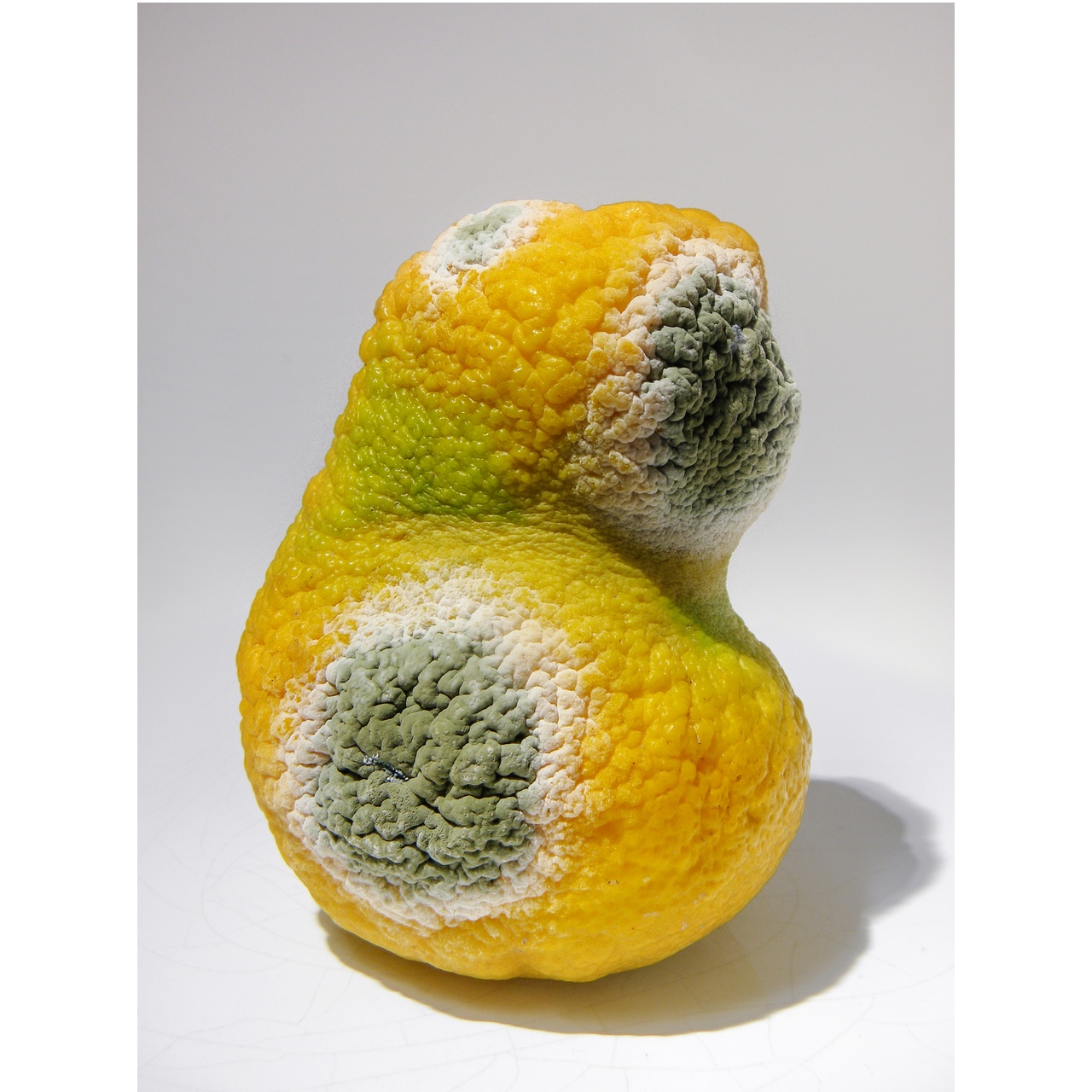
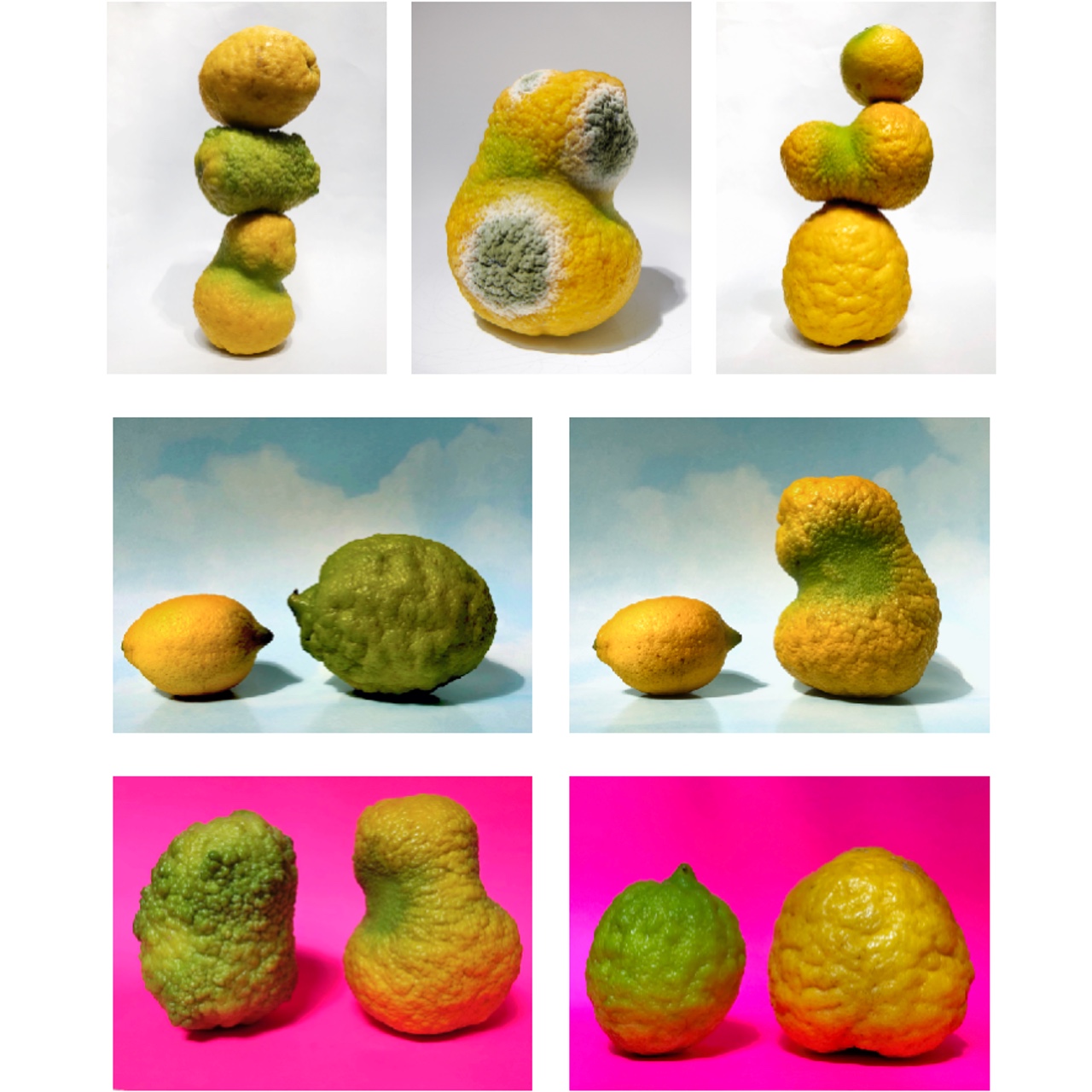
Among the recipients of those boxes of fresh fruit were Miralda and Montse Guillén. She cooked with the citrus fruits, making preserves and liqueurs. Meanwhile, Miralda created and documented a series of “choreographies”. Playing with the fruit, he made totems and other sculptural forms. These still lifes, which he photographed at the time, were printed on tissue paper.
For context, it is worth noting that in the mid-19th century, citrus-export boxes began to be prepared by wrapping each orange individually in tissue paper. As they were sold by the piece, they commanded high prices. The tissue paper served to protect the fruit and conceal imperfections in the peel; it also helped preserve it by preventing any contamination from one fruit spreading to adjacent ones through the spores of the fungi that cause decay. Later, well into the 20th century, only a few wrapped oranges were placed at the top of the box. By then, tissue paper had acquired a decorative role, as well as serving as a means of communication and direct marketing: the exporting company’s logo was printed on it, turning it into a hallmark of quality.
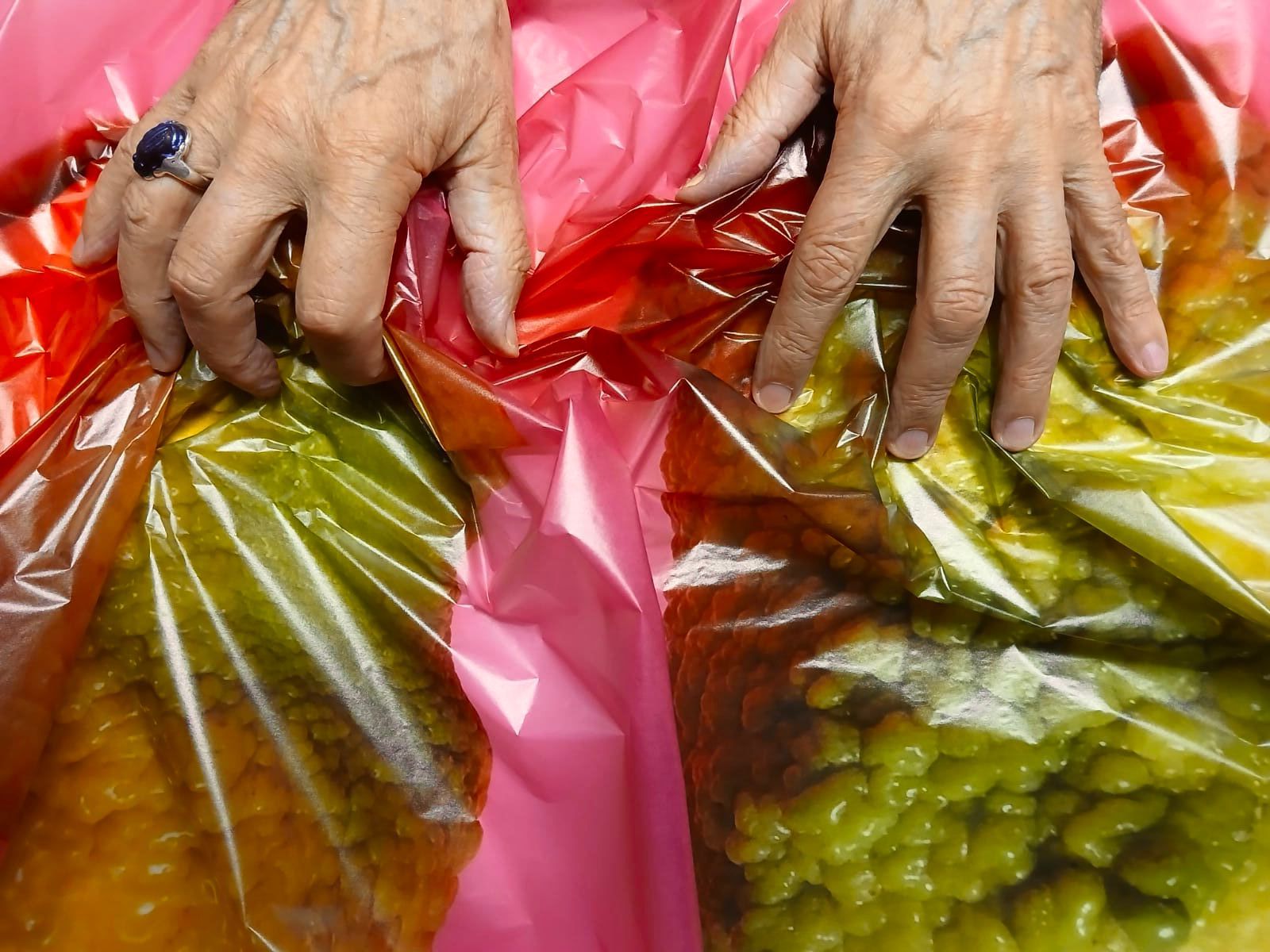
In the creation of ADN–DNA, each sheet of tissue paper bearing a printed photograph of citrus fruit is crumpled individually by the artist. Through a performative act, he transforms the sheets into balls, recalling the tissue-wrapped oranges that used to be packed in export boxes. With this gesture, Miralda leaves his imprint and, through his hands, signs each work.
The project comprises 15 editions, plus 6 APs (Artist’s Proofs) and 2 HCs (Hors de Commerce / not for sale). Each edition includes seven works, presented rolled into a ball inside a poplar-wood box.
The viewer’s action—or, in this case, that of the recipient of the work—is required to unfold the work once again, revealing the fruit it contains and restoring the tissue paper to its original size of 62 × 88 cm. It is, however, up to each person to decide whether to do so and frame the edition, or instead keep it in its box as received.
As the ball is carefully and patiently unfolded, the creases acquired by the tissue paper gradually reveal a rough texture, like that of certain citrus fruits, giving the representation of these fruits a three-dimensional quality.
Each work is numbered and signed with a stamp designed especially for the occasion. In addition, the complete edition is accompanied by a certificate issued by Galería Moisés Pérez de Albéniz and jointly signed by Miralda and Vicente Todolí, representing Todolí Citrus Fundació.
Antoni Miralda (Terrassa, 1942) is a multidisciplinary artist and perhaps one of the most versatile and brilliant figures in the Spanish avant-garde of the past fifty years. He lives and works between Miami and Barcelona. Many of his projects have a strong connection with gastronomy, food, ingredients and the social act of eating. All stem from research and unfold over extended periods, involving numerous collaborators and the participation of the viewer.
For further information, please contact us.