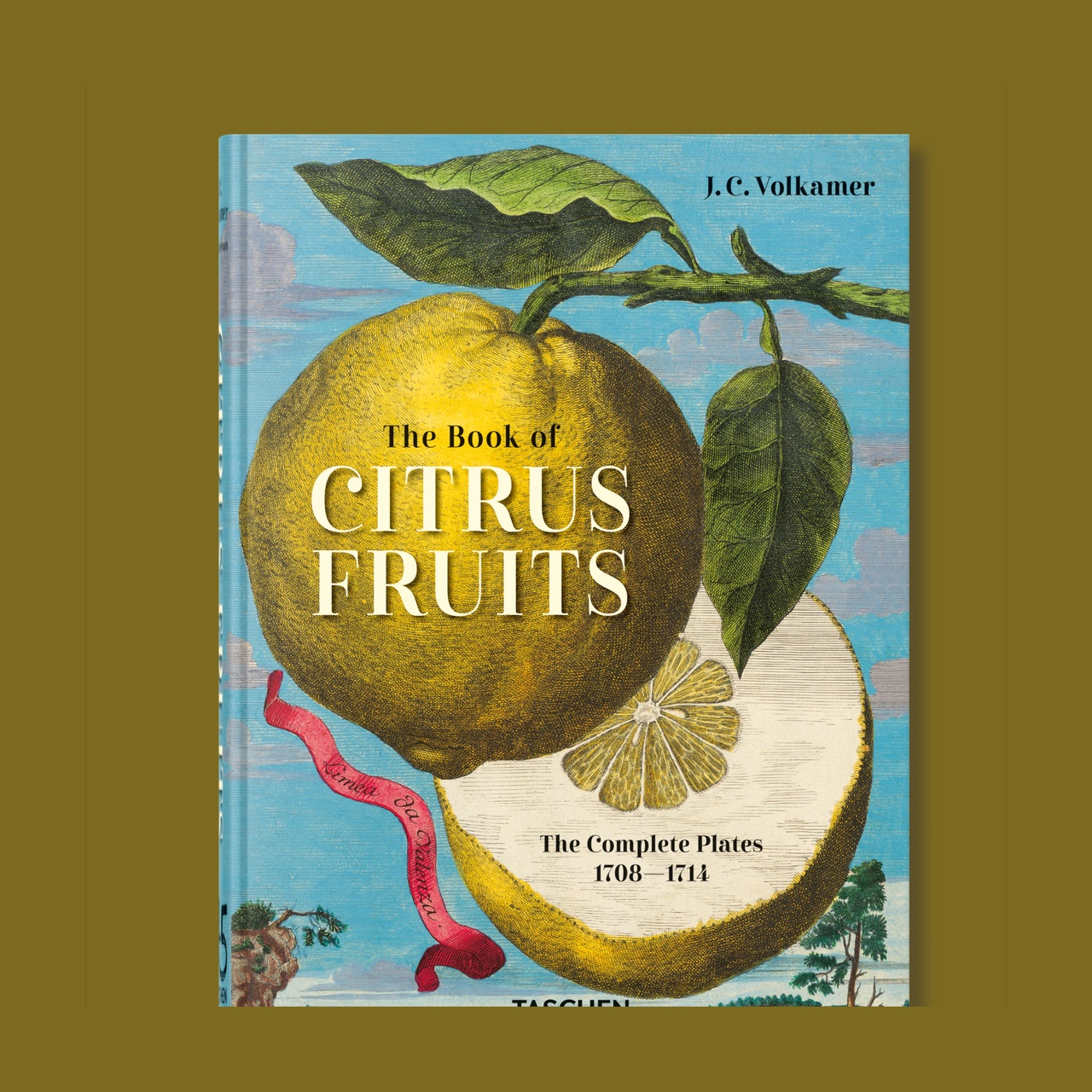
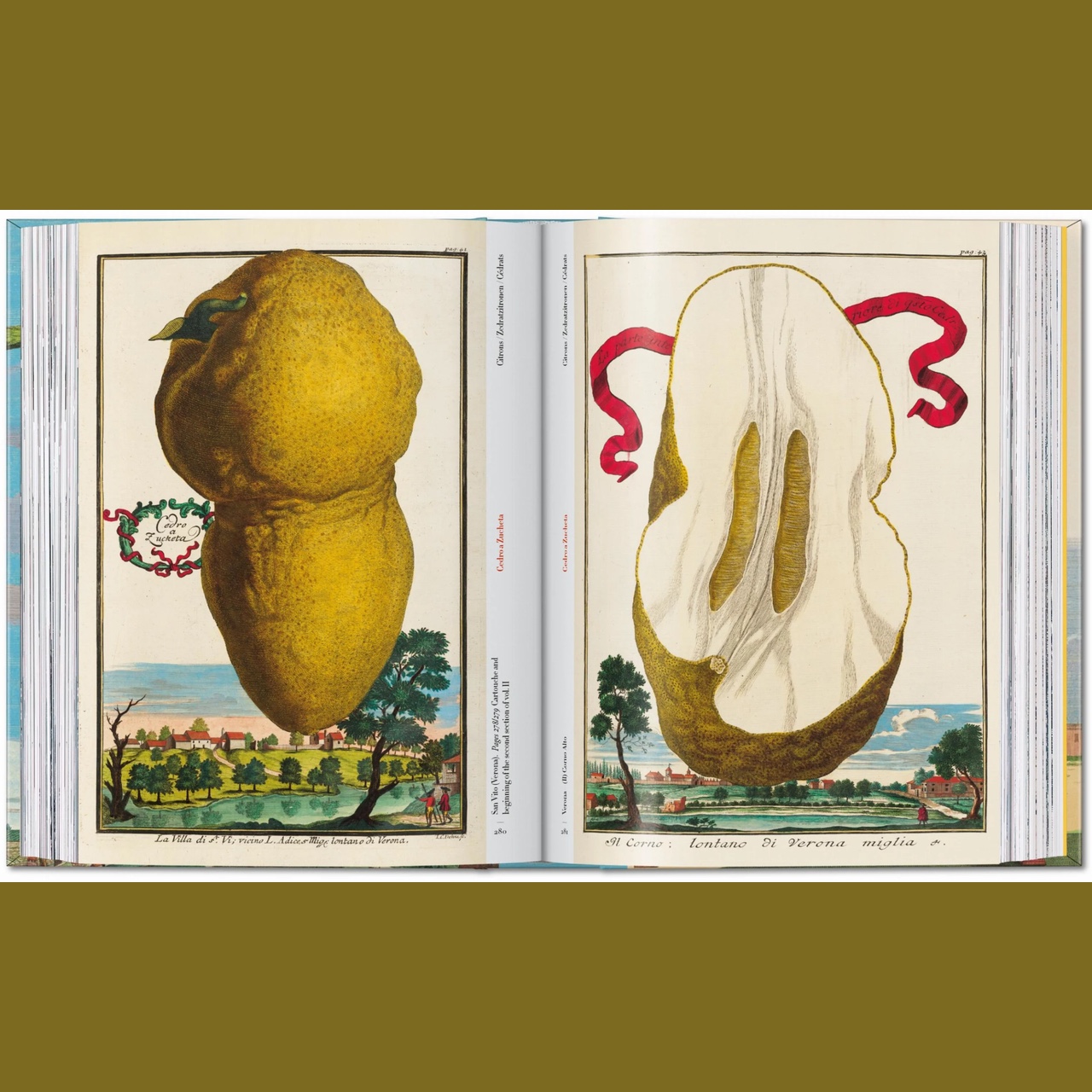
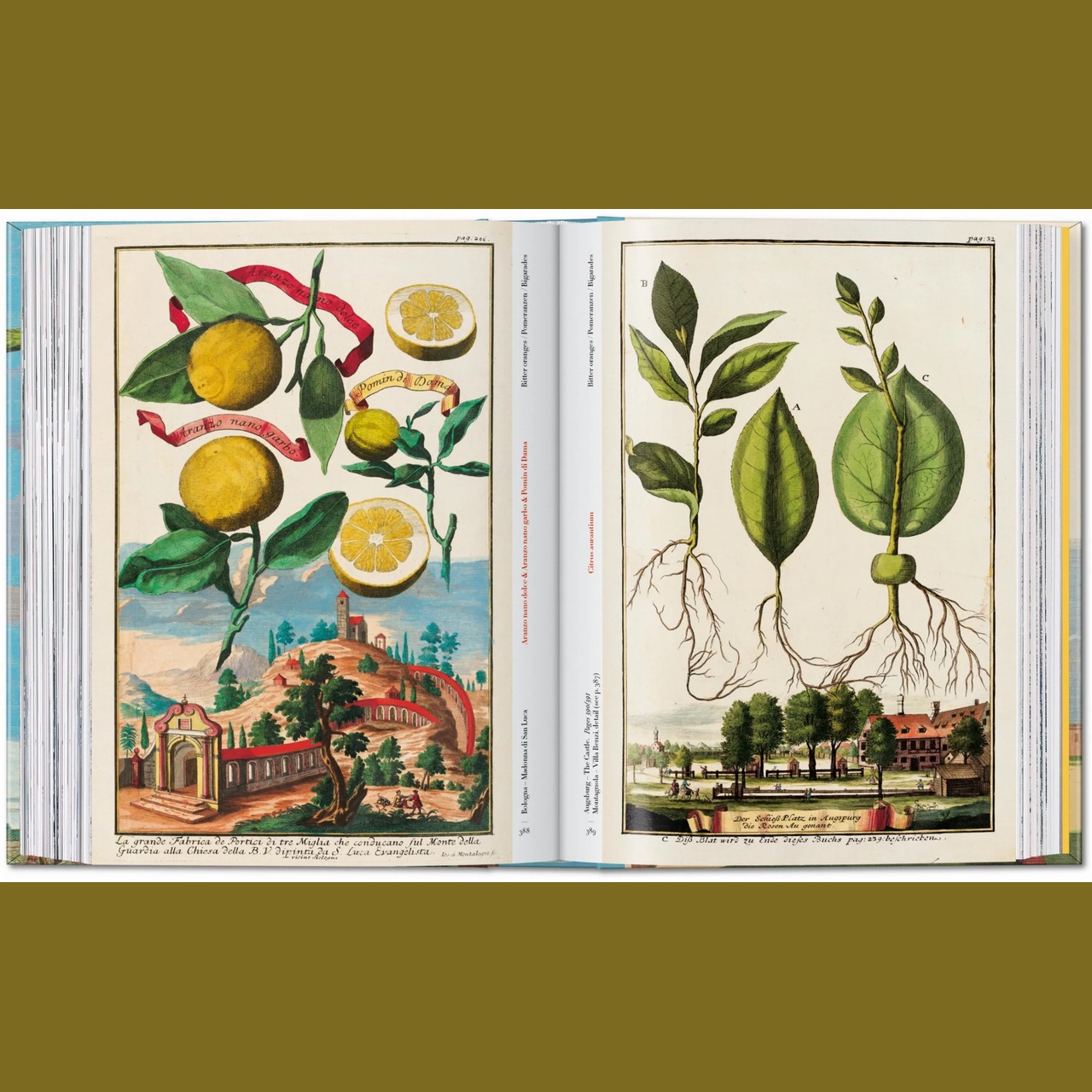
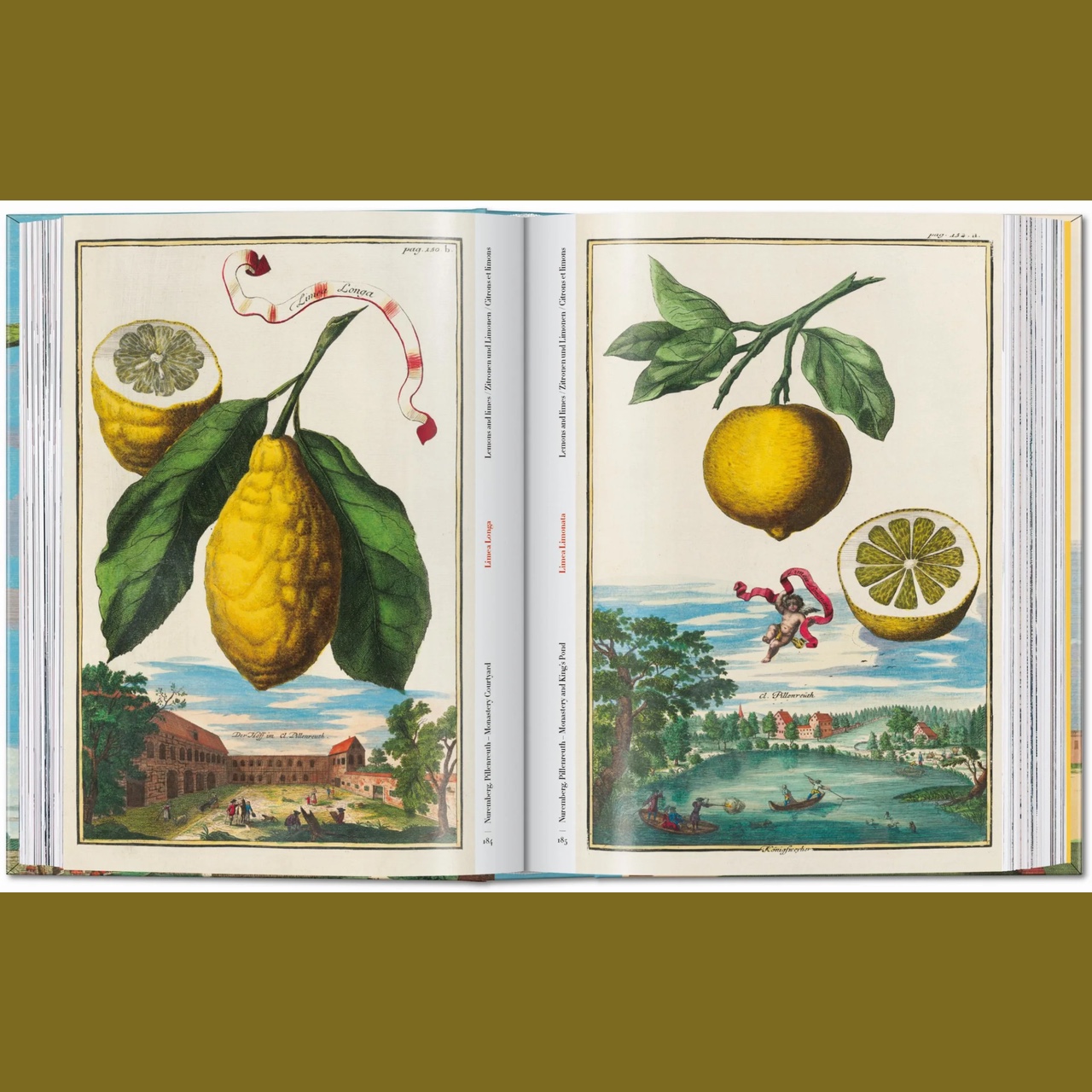
Have you ever imagined citrus fruits as celestial bodies, heroically and angelically suspended in the firmament? Perhaps not — but J. C. Volkamer did. He commissioned an extravagant and astonishing series of large-scale engravings devoted to limes, lemons and bitter oranges. In these surreal scenes, the fruits appear suspended in the ether, majestic and life-sized, floating like planets against backdrops of villas, gardens or distant landscapes.
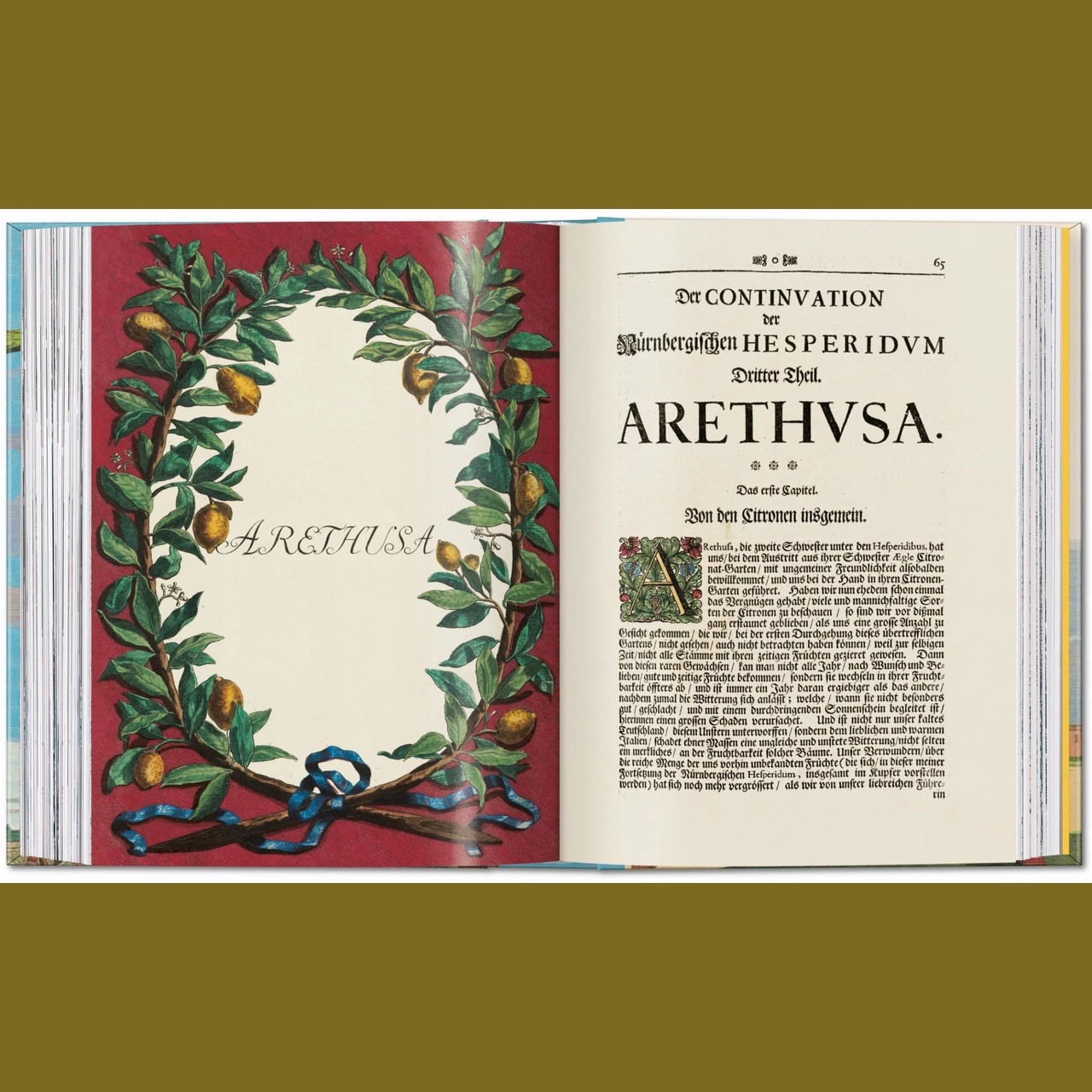
Before their importation from Italy, citrus trees were almost unknown north of the Alps. Over the following two centuries, these exotic and fragrant specimens gained popularity in gardens across the region. One horticultural enthusiast in particular, the Nuremberg merchant J. C. Volkamer, devoted himself entirely to citrus cultivation. He imported plants from Italy, Germany, North Africa and even the Cape of Good Hope, aiming to assemble the widest possible variety in his garden. His obsession went so far that he commissioned a team of artists and engravers to produce 251 plates depicting 170 different citrus varieties, illustrating the two volumes of his treatise on citrus. The first was published in 1708, under a title as extensive as it was curious: Nuremberg’s Hesperides, or a thorough description of the noble fruits known as lemons, limes and bitter oranges, and how they may be planted, cultivated and cared for in this region and neighbouring areas.
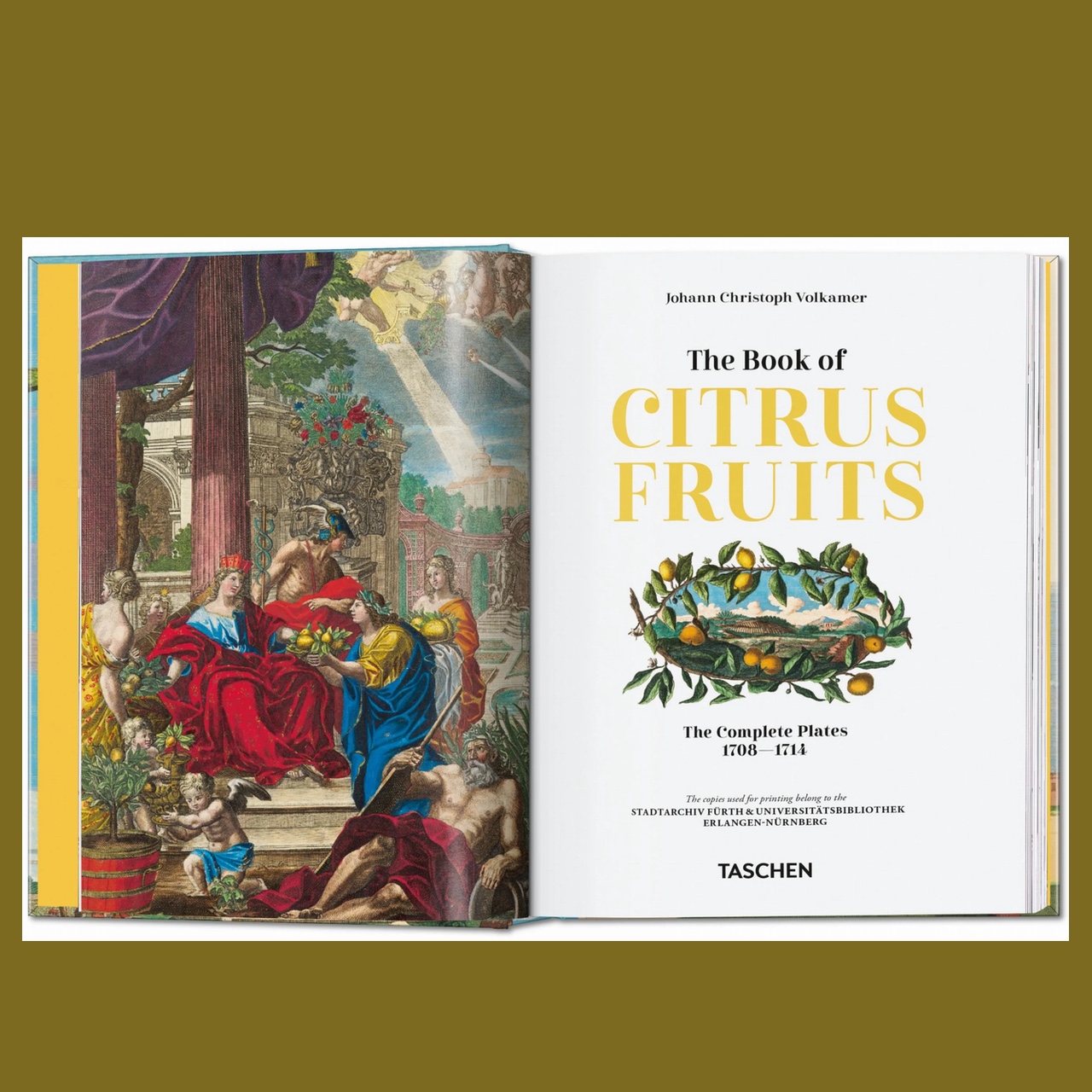
Very few coloured copies of Volkamer’s work survive today. TASCHEN’s edition is based on two hand-coloured volumes recently discovered in the municipal archives of Fürth (Germany), at Burgfarrnbach Castle. The reprint also includes 56 additional illustrations, recently uncovered, which the author had intended to publish in a third volume.